How To Repair Damaged Wallpaper?
When your wallpaper is new and fully intact, they look like the perfect part of your room’s decor. But one accident can make a dent in that perfect interior, and suddenly the wallpaper starts to look like something that should be replaced immediately. Whether it’s the doorknob that keeps hitting that one spot on the wallpaper or a TV remote that your kid threw at the wall during a tantrum, it’s all the same.
With some effort and very few tools, you can fix the damage to your wallpaper. Fixing a damaged wall alone can be a hassle; add a wallpaper to that mix, and you have got a big challenge on your hands. Worry not, Wall Paint Dubai will provide some simple and easy hacks to repair damaged wallpapers. So, read on to learn how you can DIY a damaged wallpaper repair project.
Assess The Wallpaper Damage
Before you begin anything, you should start off by assessing the severity of the damage to the wallpaper. Doing this will save you lots of time, because sometimes the repairs are easier and cheaper. However, sometimes, it is better to replace the wallpaper instead of trying to repair it. Moreover, this way you can also determine the best and most effective way to repair the damage.
Common Types Of Wallpaper Damage
There are some types of wallpaper damage that happen more often than you would think. While these can be simple to manage and repair, not knowing which kind of repair is required can lead to a waste of time and money.
Air Bubbles
Air bubbles are one of the most common types of damage to wallpapers. They usually occur over time when the wallpaper loses its grip on the wall due to a weak adhesive. If the bubbles are small, the cause can be trapped air. However, with bigger bubbles and blisters, the cause could be excessive moisture on the wall. Moisture on the wall can weaken adhesives, which leads to bubbles in the wallpaper.
Rips & Tears
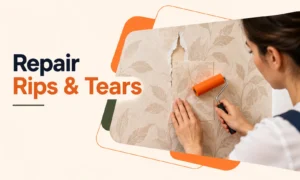
Rips and tears are almost always caused by accidents; for example, you push your furniture too close to the wall, pets scratch, and even other kinds of impacts. These rips and tears can vary in size and the depth of the damage.
Peeling Seams
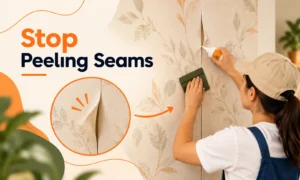
Peeling wallpaper around the edges and corners is also very common, especially if the wallpaper is in a high-moisture area. Bathrooms and kitchens usually experience this kind of damage when too much humidity weakens the adhesives.
Stains & Discoloration
High-traffic areas with wallpaper can experience lots of discolouration and stains. Such as, dining areas and kitchens can get different kinds of stains, ranging from grease stains to liquid spills. If the wallpaper is fully waterproof, the stains can be easy to manage.
Missing Patches
If you notice a patch or a section missing from the wallpaper, it can be hard to match the exact design and pattern to fill that space.
Also Read: Stick Paper on the Wall Without Damaging Paint?
Tools For Damaged Wallpaper Repair
The following are the tools that you will need to repair the most common issues that wallpaper can encounter.
Razor Knife to cut wallpaper precisely for patching and trimming
Sponge to remove excessive and residual adhesive
Small Brush to apply adhesive in small spots
Straightedge to cut straight lines of wallpaper
Seam Roller to flatten wallpaper seams and pop air bubbles
Wallpaper Seam Adhesive to reattach loose edges and corners
Wallpaper Paste to install larger pieces of wallpaper that are missing wallpaper
Vinyl Spackling Compound to fill holes and dents in the wallpaper before repairing
Which Adhesive Should You Use For Wallpaper Repairs?
Adhesive |
Best For |
Surface Type |
Pros |
Cons |
| Seam Repair Adhesive | Reattaching loose seams and patches | Any finished surface | Dries clear with no residue | Not good for full panel installation |
| VOV Adhesive | Use over vinyl surface or other non-porous materials | Existing vinyl and laminate coverings | Best for bonding vinyl | Hard to adjust errors because of limited slip |
| Border & Extra-Tack Adhesive | Border and corners over sealed paint or vinyl | Painted vinyl wallpapers and walls | Best for bonding edges that are stubborn & exposed to humidity | Overuse can lead to telegraphing |
| Heavy-duty Clear | Solid vinyl wallpaper, fabric-backed vinyl wallpaper, and commercial-grade wallpaper | Primed drywalls | Minimal staining and strong adhesion | Dries fast, leading to less working time and fewer errors |
| Clay-based adhesive | Grasscloth, heavy wallpapers, foils, and fabric-backed vinyl wallpapers | Primed drywalls and sealed plaster | Suitable for uneven walls and bonds strongly | Can be hard to spread on large areas and also stain if overused |
| Clear Premixed | Modern wallpapers with vinyl coating | Primed drywall, painted walls, sealed surfaces | No staining and easy to use with good adhesion | Excessive use can soften the wallpaper |
How To Fix Air Bubbles In Wallpapers?
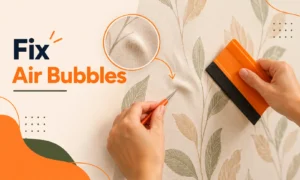
If you notice any air pockets in your wallpaper in Dubai, they are very easy to fix. If the bubble is small enough to be less than one inch, you can simply pop it using a fine needle. The puncture should be made on the side so that all the air gets out, and you can then insert glue using a small brush or a syringe. Next, you can use a small plastic tool to smooth the area and make sure to work your way outward from the centre.
If the air bubble is bigger than one inch, you can make an X-shaped cut in the centre of the bubble. You can then peel back the four corners where you have made the cut and then clean the backing to apply fresh adhesive. Next, press the edges back together and smooth out any creases with a plastic tool to align it seamlessly.
How To Fix Wallpaper Rips & Tears?
You can start by examining the direction of the tear. If the tear is straight, it will be easy to fix. Rips along the pattern lines are the easiest to repair. However, if the tear is irregular, a wallpaper patch repair will do the trick. You can replace the damaged area with a new patch.
You can cut a patch from the leftover wallpaper and place it over the damaged area, matching the pattern perfectly. Then, cut through both layers so that you get the perfect match for the patch. Remove the damaged patch and place the new patch using an appropriate adhesive. Pattern alignment can be tricky, so make sure that you are careful. You can also run over a seam roller on top of that spot to make it seamless.
Peeling Wallpaper Repair
If the edges or corners of your wallpaper are peeling, it’s best to determine the underlying cause and then proceed with the repair. If you notice dampness behind the wallpaper, it means the lack of adhesion was caused by excess moisture on the walls. You lift the wallpaper from the affected area and clean the backing to remove residual adhesive. Next, apply the appropriate wallpaper repair adhesive and spread it evenly. Then, place the wallpaper back in its place carefully and make sure to use a seam roller to prevent air pockets from forming.
When Is Wallpaper Replacement Better Than Repair?
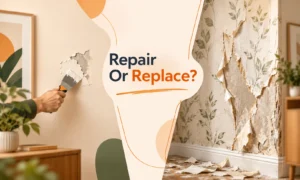
There is an easy way to determine if repairing the wallpaper would be easier and cheaper than replacing it. Because sometimes, replacing the whole thing is the easier solution. Here is what you can do:
Repair
If the wallpaper damage is less than 10% of the total area and the rest of the wallpaper is in good condition, you can repair the damaged areas. You should also make sure that the matching wallpaper is available for patch repair and the wall behind is in good condition as well.
Replace
If the damage to the wallpaper is more than 25% of the area and there are multiple types of damage. It could include rips, curling wallpaper edges, loose seams, air pockets, and water-damaged wallpaper. Stains and discolouration on the wallpaper can also only be fixed by replacing the whole thing.
Frequently Asked Questions
Can Damaged Wallpaper Be Repaired Without Replacing It?
Yes, you can repair the wallpaper depending on the type and the severity of the damage.
Can You Patch Torn Wallpaper Without A Visible Join?
Yes, if the wallpaper is torn along the pattern lines, it is easy to patch a seamless repair. Otherwise, you have to be extra careful by aligning the pattern with the original one.
Why Do Wallpaper Seams Keep Coming Loose?
Mostly, the cause of loose seams can be excess moisture on the walls. But it can also be due to cheap adhesive or improper wall preparation.
Do Wallpaper Bubbles Disappear After Drying?
No, you always have to smooth out any air pockets by yourself. If there is a bubble in the wallpaper, it won’t go away on its own.
Can You Repair Wallpaper Without A Spare Roll?
No, if you don’t have leftover wallpaper in the same design, then patch repair is not possible.
Why Does Wallpaper Peel In Dubai Homes?
The high humidity content of Dubai is the number one cause of loose seams and peeling wallpaper.
Can AC Condensation Cause Wallpaper Damage?
Yes, it can cause moisture damage to the wallpaper.
Can Water-Damaged Wallpaper Be Saved?
No, moisture-damaged wallpaper can’t be used again if the damage is over a large area.
What Helps Prevent Wallpaper Peeling In Humid Rooms?
It is important to use moisture-resistant adhesives and ensure proper wall preparation to minimize the risk of wallpaper peeling.
Conclusion
There are many types of issues that wallpapers can face, especially due to the high humidity in the climate of Dubai. Damp walls are a common issue, and if you are not ready for a DIY project to fix your wallpaper, you can always call a professional for damaged wallpaper removal in Dubai. Wall Paint Dubai provides affordable and efficient wallpaper repair and replacement services all over the UAE.
Tags: Wallpapers